
Embark on a journey through the world of Holistic Education, where students are guided to reach their full potential through a well-rounded approach to learning.
Delve into the key principles, benefits, and approaches that distinguish holistic education from traditional methods.
Holistic Education Definition
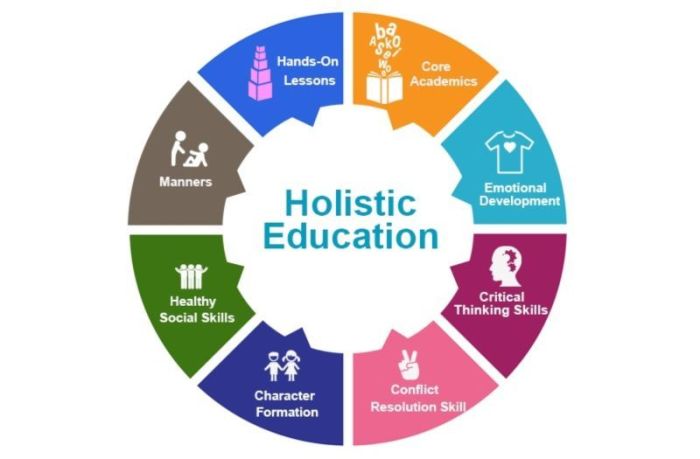
Holistic education is an approach to learning that focuses on the development of the whole person – mind, body, and spirit. It goes beyond academics to include social, emotional, and physical well-being, aiming to nurture individuals who are well-rounded and capable of facing the challenges of life with resilience and empathy.
Key Principles of Holistic Education
- Integration of Mind, Body, and Spirit: Holistic education values the interconnectedness of all aspects of a person’s being, recognizing that mental, physical, and spiritual well-being are all essential for overall growth.
- Emphasis on Experiential Learning: Instead of rote memorization, holistic education encourages hands-on experiences, real-life applications, and critical thinking to deepen understanding and foster creativity.
- Focus on Individual Growth: Each individual is seen as unique, with their own strengths, challenges, and learning styles. Holistic education tailors the learning experience to meet the needs of each student.
- Community and Global Awareness: Holistic education promotes a sense of belonging and connectedness within the community and encourages students to develop a global perspective, empathy, and a sense of social responsibility.
Examples of How Holistic Education Differs from Traditional Education
- In traditional education, the focus is primarily on academic achievement through standardized testing, while holistic education prioritizes the overall well-being and personal growth of students.
- Traditional education often follows a one-size-fits-all approach, whereas holistic education recognizes and celebrates the diversity of learners, catering to individual needs and interests.
- Holistic education values experiential learning, creativity, and critical thinking, while traditional education tends to rely more on memorization and repetition of facts.
- Traditional education may neglect the social and emotional development of students, whereas holistic education places a strong emphasis on building healthy relationships, empathy, and self-awareness.
Holistic Education Benefits
Holistic education offers a range of advantages for students, focusing on their overall development and well-being. By taking into account the mind, body, and spirit, holistic education nurtures students in a comprehensive way that traditional education may not achieve.
Personal Growth and Development
Holistic education places a strong emphasis on personal growth and development, encouraging students to explore their interests, passions, and values. This approach helps students develop a deeper understanding of themselves and their place in the world, leading to increased self-awareness and confidence. By addressing the emotional, social, and physical aspects of a student’s life, holistic education promotes a well-rounded individual who is better equipped to navigate challenges and opportunities.
Critical Thinking and Creativity
One of the key benefits of holistic education is its focus on critical thinking and creativity. By incorporating a variety of subjects and teaching methods, holistic education encourages students to think outside the box, question assumptions, and approach problems from multiple perspectives. This fosters a sense of curiosity and innovation, helping students develop the skills needed to adapt to an ever-changing world.
Moreover, by integrating arts, music, and physical activities into the curriculum, holistic education stimulates creativity and allows students to express themselves in unique ways.
Holistic Education Curriculum
Holistic education curriculum focuses on nurturing the overall development of students by integrating various components that go beyond traditional academic subjects. This approach aims to foster a well-rounded individual with a balanced focus on academics, arts, physical well-being, and social-emotional learning.
Components of a Holistic Education Curriculum
- Academic subjects covering core disciplines like math, science, language arts, and social studies.
- Arts education including music, visual arts, drama, and dance to promote creativity and self-expression.
- Physical education emphasizing the importance of physical activity, sports, and overall health.
- Mindfulness practices to support mental well-being, self-awareness, and emotional regulation.
- Community service and social-emotional learning to encourage empathy, compassion, and social responsibility.
Integration of Arts, Physical Education, and Mindfulness
In a holistic education curriculum, arts, physical education, and mindfulness are seamlessly integrated into the learning experience to provide a well-rounded approach to education.
- Arts education allows students to explore their creative side, develop critical thinking skills, and enhance self-confidence through various art forms.
- Physical education promotes physical fitness, teamwork, leadership skills, and overall well-being, contributing to a healthy lifestyle.
- Mindfulness practices such as meditation, breathing exercises, and yoga help students manage stress, improve focus, and cultivate emotional intelligence.
Project-Based Learning in a Holistic Education Setting
Project-based learning is a common approach in holistic education that allows students to apply their knowledge and skills to real-world challenges and projects.
- Example: Students working on a community garden project not only learn about plants and sustainability but also develop teamwork, problem-solving, and leadership skills.
- Example: Creating a play or musical production involves collaboration, creativity, and communication skills, enhancing both artistic expression and social development.
- Example: Engaging in a mindfulness retreat project where students plan and execute activities focused on self-care, relaxation, and mental well-being, promoting a holistic approach to health.
Holistic Education Approaches
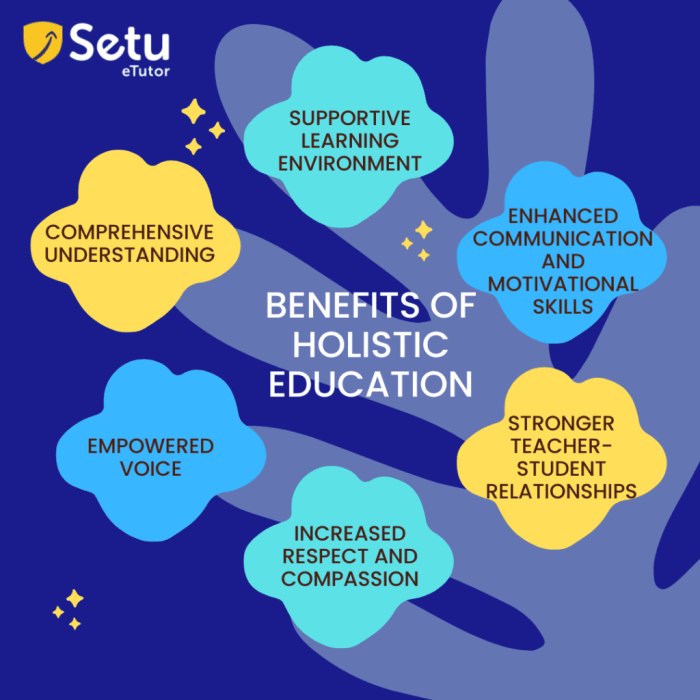
Holistic education approaches encompass a wide range of strategies that aim to address the overall development of students, including their social, emotional, and academic needs. These approaches differ significantly from traditional teaching methods in their focus on the whole child rather than just academic achievement.
Comparison of Holistic Education with Traditional Teaching
Traditional teaching methods often prioritize academic knowledge and standardized testing, while holistic education approaches emphasize the importance of nurturing the social and emotional well-being of students alongside academic learning. Unlike traditional teaching, holistic education recognizes the uniqueness of each student and values their individual strengths and interests.
Addressing Social, Emotional, and Academic Needs
Holistic education places a strong emphasis on creating a supportive and inclusive learning environment that fosters social and emotional growth. By incorporating activities that promote collaboration, communication, and self-expression, holistic education helps students develop essential life skills such as empathy, resilience, and critical thinking. This approach ensures that students not only excel academically but also thrive emotionally and socially.
Role of Teachers in Implementing Holistic Education Practices
Teachers play a crucial role in implementing holistic education practices by creating a safe and nurturing classroom environment where students feel valued and supported. They need to adopt student-centered teaching methods that cater to the diverse needs and learning styles of each individual. By fostering positive relationships with students and encouraging their holistic development, teachers can help create a conducive learning environment that promotes growth and well-being.
Education History
Holistic education has a rich history dating back to ancient civilizations that valued a well-rounded approach to learning. The roots of holistic education can be traced to indigenous cultures that emphasized the interconnectedness of all living beings and the importance of nurturing the mind, body, and spirit in harmony.In the modern era, influential educators and thinkers have played a significant role in shaping the holistic education movement.
One of the key figures is John Dewey, whose progressive ideas on experiential learning and education as a social process laid the foundation for holistic education principles. Rudolf Steiner, the founder of Waldorf education, also contributed to holistic education with his emphasis on nurturing the whole child through artistic, practical, and intellectual activities.Over time, holistic education has evolved to meet the changing needs of students in a rapidly advancing world.
As technology and globalization have transformed the educational landscape, holistic education has adapted to incorporate new approaches that foster critical thinking, creativity, and emotional intelligence. Today, holistic education continues to emphasize the importance of educating the whole person and cultivating a sense of interconnectedness with the world around us.
Education Games
Educational games play a crucial role in holistic learning by providing a fun and engaging way for students to acquire knowledge and skills across various subjects. These games are designed to promote active learning, critical thinking, problem-solving, and collaboration among students.
Enhancing Problem-Solving Skills and Collaboration
Educational games are effective in enhancing problem-solving skills as they often present students with challenges that require them to think critically and come up with solutions. By engaging in these games, students learn how to analyze situations, make decisions, and apply their knowledge in a practical context. Furthermore, educational games promote collaboration among students by encouraging teamwork, communication, and sharing of ideas to achieve common goals.
- One example of an educational game that aligns with the principles of holistic education is “SimCity”. In this game, students take on the role of city planners and must make decisions related to urban planning, infrastructure development, and resource management. Through playing “SimCity”, students learn about civic responsibility, sustainability, and the interconnectedness of various systems within a city.
- Another example is “MinecraftEdu”, a version of the popular game “Minecraft” specifically designed for educational purposes. In “MinecraftEdu”, students can collaborate to build virtual worlds, solve challenges, and explore concepts such as creativity, teamwork, and problem-solving. This game allows students to apply their knowledge in a hands-on and interactive way.
- “Prodigy” is an educational game that focuses on math skills and problem-solving. By solving math problems and completing quests, students can progress through the game and improve their mathematical abilities. “Prodigy” combines learning with gameplay to make math more engaging and enjoyable for students.
Education Film
Films can be powerful educational tools in a holistic education approach, offering visual storytelling that engages students on a deeper level. The impact of visual storytelling on student learning and engagement is significant, as it appeals to different learning styles and enhances comprehension and retention of information. Films can also evoke emotions, stimulate critical thinking, and encourage empathy and perspective-taking.
Films Promoting Values
- Documentaries such as “An Inconvenient Truth” promote sustainability and environmental awareness, encouraging students to think about their impact on the planet.
- Movies like “Hidden Figures” highlight diversity and the importance of inclusivity, showcasing the achievements of underrepresented groups in history.
Education Banner
Education banners play a crucial role in creating a vibrant and engaging learning environment within educational settings. These banners are not only decorative but also serve as powerful tools to communicate important messages, values, and themes to students, teachers, and visitors.
Significance of Banners in Educational Settings
Educational banners help in setting the tone and atmosphere of the learning space. They can showcase motivational quotes, inspiring images, or key educational principles that reinforce the school’s mission and vision. By strategically placing banners throughout the school premises, educators can create a visually stimulating environment that promotes curiosity, creativity, and a positive mindset.
Creating a Positive Learning Environment
- Inclusivity: Banners that celebrate diversity, equity, and inclusion can help students feel accepted and valued within the school community.
- Creativity: Artistic and colorful banners can spark creativity and imagination among students, encouraging them to think outside the box.
- Growth Mindset: Banners displaying messages about resilience, perseverance, and the importance of learning from mistakes can foster a growth mindset among students, promoting a willingness to take on challenges and embrace learning opportunities.
Examples of Educational Banners
- Inclusivity: A banner showcasing students from diverse backgrounds working together harmoniously, with the message “Unity in Diversity”.
- Creativity: A banner featuring a vibrant art display with the quote “Creativity is intelligence having fun” by Albert Einstein.
- Growth Mindset: A banner illustrating a seed growing into a strong tree with the caption “Growth happens outside your comfort zone”.
Education Counselor
Education counselors play a crucial role in supporting the holistic development of students by addressing their academic, social, and emotional needs. By providing guidance, support, and counseling services, education counselors help students navigate challenges and develop a well-rounded approach to their education.
Role of Education Counselors
Education counselors can address academic challenges by providing personalized academic support, helping students set goals, develop study skills, and manage their time effectively. Socially, counselors can facilitate group discussions, promote positive peer relationships, and address issues of bullying or social exclusion. Emotionally, counselors can offer individual counseling sessions, teach coping strategies, and provide a safe space for students to express their feelings.
Counseling Strategies for Holistic Education
- Implementing mindfulness techniques to help students manage stress and improve focus.
- Encouraging self-reflection and self-awareness to promote personal growth and emotional intelligence.
- Utilizing art therapy or journaling as creative outlets for students to explore their emotions and express themselves.
- Collaborating with teachers and parents to create a support network that addresses all aspects of a student’s well-being.
Education Degree
Holistic education plays a crucial role in academic degree programs by providing a comprehensive approach to learning that focuses on the development of the whole individual. Many universities and colleges have integrated holistic education principles into their curriculum to ensure that students receive a well-rounded and balanced education.
Relevance of Holistic Education in Academic Degree Programs
Universities and colleges recognize the importance of holistic education in preparing students for the complexities of the modern world. By incorporating holistic principles into their curriculum, institutions aim to nurture students’ intellectual, emotional, social, and physical well-being, fostering a deeper understanding of themselves and the world around them.
Career Prospects and Opportunities for Graduates with a Degree in Holistic Education
Graduates with a degree in holistic education have a wide range of career opportunities in various fields such as education, counseling, social work, and healthcare. They can work as teachers, counselors, life coaches, wellness practitioners, or community educators, among other roles. With a strong foundation in holistic principles, graduates are well-equipped to make a positive impact on individuals and communities.
In conclusion, Holistic Education stands as a holistic approach that nurtures students’ minds, bodies, and spirits, fostering a deep sense of personal growth and critical thinking skills. Embracing this educational philosophy opens up new avenues for students to excel in a diverse and interconnected world.
FAQ Explained
How is holistic education different from traditional education?
Holistic education focuses on nurturing all aspects of a student – mind, body, and spirit, while traditional education often emphasizes academic achievement only.
What are the advantages of holistic education?
Holistic education promotes personal growth, critical thinking, creativity, and a deeper understanding of interconnectedness in the world.
How do educational games align with the principles of holistic education?
Educational games enhance problem-solving skills, collaboration, and creativity, which are key aspects of holistic education’s approach to learning.


